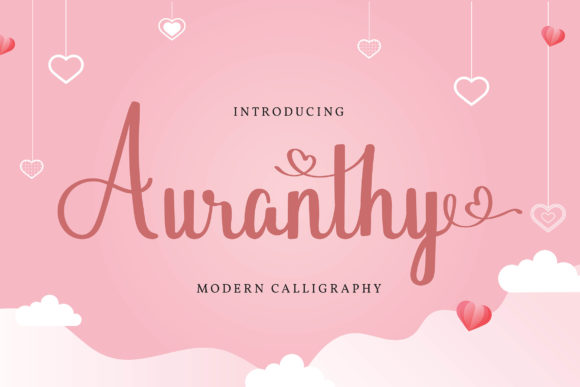
Auranthy: A Sweet Script Font for Editorial Design
There’s something about the right font that can transform a layout from functional to unforgettable. I recently found myself in just such a moment while redesigning the header for a lifestyle blog. The challenge was simple—find a font that felt warm, approachable, and elegant enough to reflect the tone of the content without overwhelming it. That’s when I discovered Auranthy, a handwritten script font from Script Amp that brought a gentle charm to the project.
The Visual Character of Auranthy
Auranthy is a romantic, handwritten typeface with soft curves and a rhythmic flow that feels like a personal note written by hand. It carries a sense of intimacy and sincerity, making it ideal for editorial projects that want to evoke emotion. The visual character is delicate yet expressive, with subtle variations in stroke weight and a natural slant that gives it a human touch. This makes it particularly well-suited for headings, pull quotes, and decorative accents where personality matters more than strict readability.
Its mood is warm and inviting, which aligns perfectly with lifestyle blogs, wedding guides, and creative course materials. The font doesn’t feel overly ornate or difficult to read at a glance, which is important when trying to maintain clarity in editorial layouts.
Real-World Applications in Editorial Design
I tested Auranthy across several editorial formats to see how it performed in real publishing scenarios. For a recipe ebook, I used it as the main title font. The result was a soft, inviting cover that immediately communicated the book’s cozy, home-cooked vibe. In another case, I applied it to a wedding guide as section headers and pull quotes, which added a personal, handwritten feel that resonated with readers looking for romantic inspiration.
In a coaching workbook, Auranthy worked beautifully as chapter openers and decorative elements. It provided a gentle transition between sections, reinforcing the idea of guidance and care. For a newsletter header, it offered a balance between elegance and approachability, helping to draw attention without being too flashy.
However, it’s worth noting that Auranthy is not the best choice for body copy or dense paragraphs. Its expressive nature makes it less suitable for long-form reading, especially on screens or in print where legibility is key. Instead, it shines in titles, subtitles, and short bursts of text where its character can be appreciated without distraction.
Readability and Practical Considerations
When considering Auranthy for your next project, it’s essential to think about how it will perform in different formats. On screen, the font remains readable at larger sizes, though it may require careful spacing to avoid clutter. In PDF exports and print materials, it holds up well, especially when paired with a clean sans serif or serif font for body text.
For mobile layouts, Auranthy works best in headlines or callout sections where it won’t strain the eye. If you plan to use it for digital publications or web design, ensure that it’s properly optimized for responsive typography and that it supports the necessary file formats, including OTF and TTF.
Another practical consideration is font pairing. Auranthy pairs exceptionally well with modern sans serif fonts like Helvetica Neue or Montserrat for body copy, creating a balanced contrast between decorative and functional text. For a more traditional look, a classic serif font like Garamond or Georgia can complement Auranthy’s romantic style.
Choosing Auranthy for Your Brand or Publication
If your brand identity leans toward warmth, creativity, or romance, Auranthy could be an excellent addition to your design toolkit. It’s particularly useful for content creators who want to inject a personal, handwritten feel into their work. Whether you’re designing a printable planner, a course PDF, or a magazine layout, Auranthy brings a unique visual appeal that sets your content apart.
Before using Auranthy in commercial projects, make sure to review the included styles, alternates, ligatures, and multilingual support. Also, confirm that the font license allows for use in ebooks, templates, printables, and other paid digital downloads. These details are crucial for ensuring that your design choices remain both legal and effective.
In the end, Auranthy is more than just a font—it’s a storytelling tool. It adds a layer of emotion and authenticity to any editorial design, making it a valuable asset for bloggers, publishers, and creative professionals looking to enhance their content with thoughtful typography.